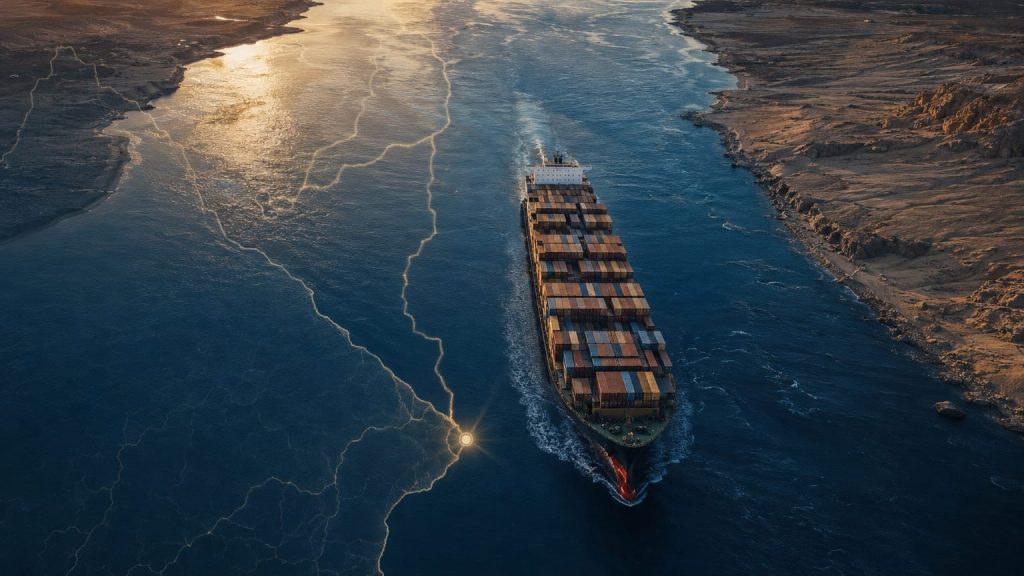
Since late February 2026, the near-closure of the Strait of Hormuz has sent shockwaves through global commodity supply chains, and East Africa is feeling the impact directly.
Major shipping lines including Maersk, CMA CGM, and Hapag-Lloyd began rerouting vessels around the Cape of Good Hope in March 2026, adding 10–14 days and an estimated $1.2–1.8 million in additional fuel costs per round trip. (IndexBox) For importers in Djibouti and the wider Horn of Africa, this means longer lead times, higher freight costs, and tighter supply windows across all food commodity categories.
Djibouti, located at the strategic chokepoint of Bab El-Mandeb, has built its economic model around maritime logistics and regional transit, and its ports serve not only its own population but also the vast Ethiopian market, whose imports and exports overwhelmingly pass through Djiboutian infrastructure. (Research And Markets)
A combined Hormuz and Bab al-Mandeb disruption places an estimated $10 billion per day of global trade at risk, with projections indicating a 17% rise in food-insecure people across East and Southern Africa if the conflict persists. (IndexBox)
At Dania General Trading, our pre-established sourcing relationships across 20+ countries and our continuous breakbulk operation ensure our partners maintain uninterrupted supply—even when global trade routes come under pressure.