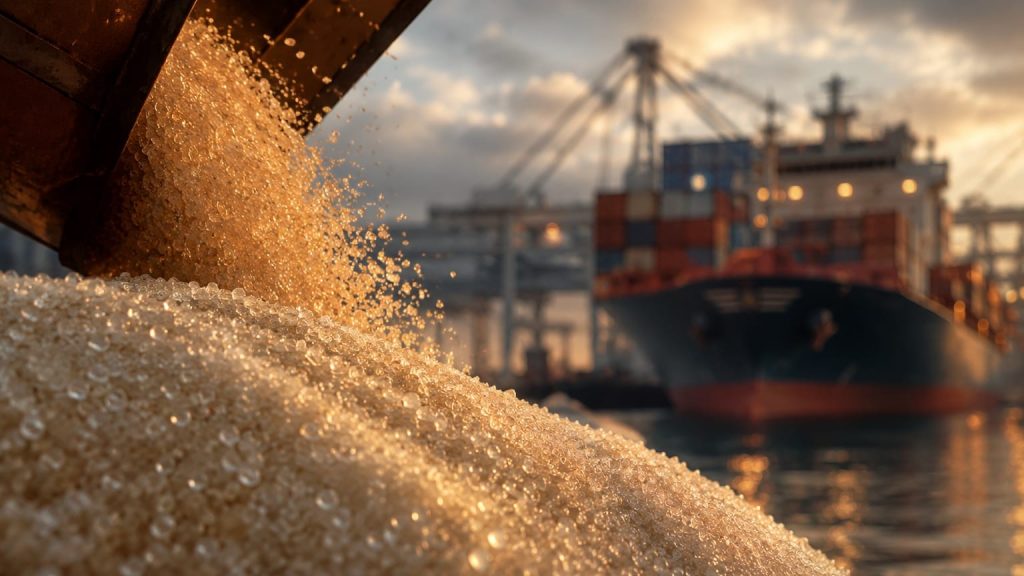
On paper, the global sugar market looks comfortable. World centrifugal sugar production for 2025/26 is forecast at 189.3 million tons against consumption of 178.1 million tons — a surplus year by any measure. (Academia.edu) Prices have eased from recent highs. Stocks are building.
But for importers operating in East Africa and the Horn of Africa, the headline figures are only part of the story. What matters at the port gate is landed cost — and in 2026, that number is being shaped by forces that have nothing to do with how much sugar Brazil produced.
The Route Problem
The conflict in the Persian Gulf has directly affected sugar supply routes to East Africa and the Middle East. Passages through the Red Sea and the Suez Canal have been hampered, forcing vessels from Brazil, Central America, and Europe to reroute around the Cape of Good Hope, adding significant voyage time and cost to every shipment. (Hedgepoint Global)
Large refineries in the region, including those in Dubai, are now operating with more fragile supply chains regardless of origin, as entry routes through both the Atlantic basin and Southeast Asia are affected simultaneously. (Hedgepoint Global)
For markets like Djibouti—a critical re-export and transit hub for Ethiopia, Somalia, and the wider Horn of Africa—this matters considerably. Djibouti imported $74.68 million worth of cane sugar from Brazil alone in 2023 (Trading Economics), and that import dependency has not diminished. What has changed is the cost and complexity of getting those volumes delivered on schedule.
Africa’s Structural Import Position
FAO projections show African sugar imports rising 4.5% to 18.5 million tons in 2025/26, reinforcing the continent’s position as the world’s second-largest sugar importing region after Asia. (Ecofin Agency) Demand is not the question. Supply continuity and delivered price stability are.
The African sugar market presents a complex and fragmented picture, with stark contrasts between mature, self-sufficient producers and vast, import-dependent consumption zones. (IndexBox) East Africa falls firmly in the latter category, making sourcing relationships and supply chain reliability more important than spot price alone.
Brazil Dominates — But Concentration Creates Risk
Brazil alone is forecast to export 35.7 million tons of sugar in 2025/26 — approximately 54% of global exports. (Academia.edu) That concentration means that shifts in Brazil’s sugar-versus-ethanol allocation, or any disruption to Atlantic shipping corridors, can create prompt tightness in regional markets even when global balances appear comfortable.
Brazil may produce around 621 million metric tons of sugarcane in the current cycle (StoneX). Strong feedstock availability is not in doubt. The question for East African buyers is whether volume translates to timely, cost-effective delivery given current freight and insurance conditions.
What Buyers Should Be Watching
The sugar market in 2026 rewards buyers who are tracking landed cost, not just benchmark price. Ocean freight increases, war-risk insurance surcharges, and extended voyage times are inflating the cost of imported sugar across East African markets regardless of what ICE futures indicate.
For procurement teams across Ethiopia, Somalia, Eritrea, and the wider Horn of Africa, this environment underscores the value of sourcing through established trading relationships with direct access to origin supply and regional logistics expertise.
Dania General Trading is a Djibouti-based commodities trading company supplying sugar, grains, edible oils, and related food commodities across the Horn of Africa and East Africa region.
For trade enquiries:
www.daniatrading.com