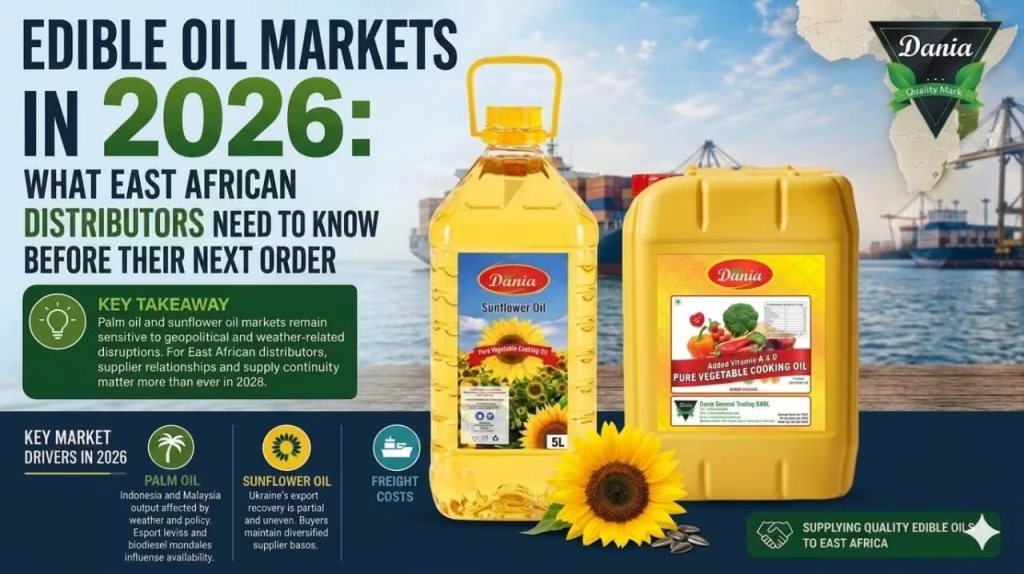
Key Takeaway
Palm oil and sunflower oil markets remain sensitive to geopolitical and weather-related disruptions. For East African distributors, supplier relationships and supply continuity matter more than ever in 2026.
A Market Under Continued Pressure
Edible oils including palm, sunflower, soybean, and canola varieties are among the most price-sensitive commodities in global food trade. Since 2021, this market has experienced a series of supply shocks that have tested the resilience of distribution networks worldwide, and East Africa has not been insulated from those pressures.
The Russian invasion of Ukraine in 2022 removed a major share of global sunflower oil supply almost overnight. While production has since partially recovered in Ukraine and alternative origins have stepped in, the episode fundamentally changed how sophisticated buyers approach edible oil procurement.
Key Market Drivers in 2026
- Palm oil: Output from Indonesia and Malaysia which together account for the majority of global palm oil production remains subject to weather and policy variables. Indonesian export levies and biodiesel blending mandates continue to influence available supply for food-use buyers.
- Sunflower oil: Ukraine’s export recovery has been partial and uneven. Global buyers are maintaining more diversified supplier bases than pre-2022 norms.
- Freight costs: Rerouting around the Red Sea has added transit time and cost for shipments from European and Black Sea origins to East Africa. Suppliers using Gulf and South Asian origins via the Indian Ocean route are less affected.
- Currency: US Dollar strength continues to affect landed cost calculations for buyers paying in local currencies, making supplier pricing transparency increasingly important.
What Strong Procurement Looks Like in This Environment
Distributors who have weathered the recent volatility most effectively share a few common practices:
- They work with suppliers who hold multi-origin sourcing capacity not just one type of oil from one country.
- They communicate regularly with their supplier about market conditions, rather than discovering price changes only at order time.
- They build modest buffer stock into their planning cycles, reducing reliance on last-minute sourcing when their current stock is depleted.
- They evaluate total landed cost including freight, port handling, and local transport rather than comparing only FOB or CIF prices.
Our Edible Oil Portfolio
Dania General Trading sources and supplies a range of edible oils to wholesale buyers and distributors across East Africa, including palm oil and sunflower oil. Our sourcing relationships span Malaysia, Indonesia, Turkey, allowing us to adapt to market conditions across different origin markets.
Our team monitors price movements in producing regions and can provide buyers with practical market context when they are planning their next order. If you are reviewing your edible oil procurement for the coming quarter, we welcome the conversation.