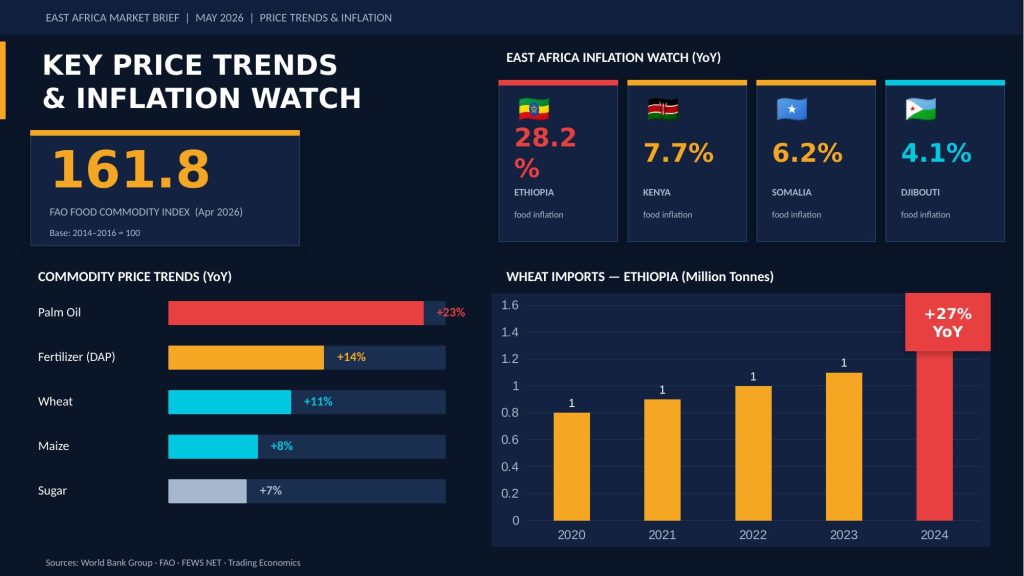
Global commodity prices are on the rise in 2026, and the implications for East Africa’s import-dependent markets are significant.
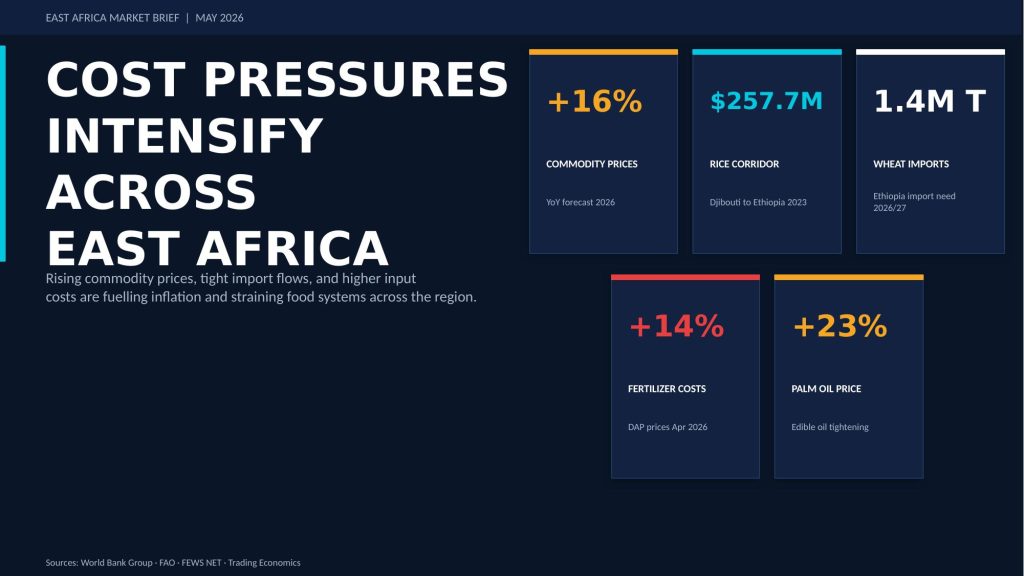
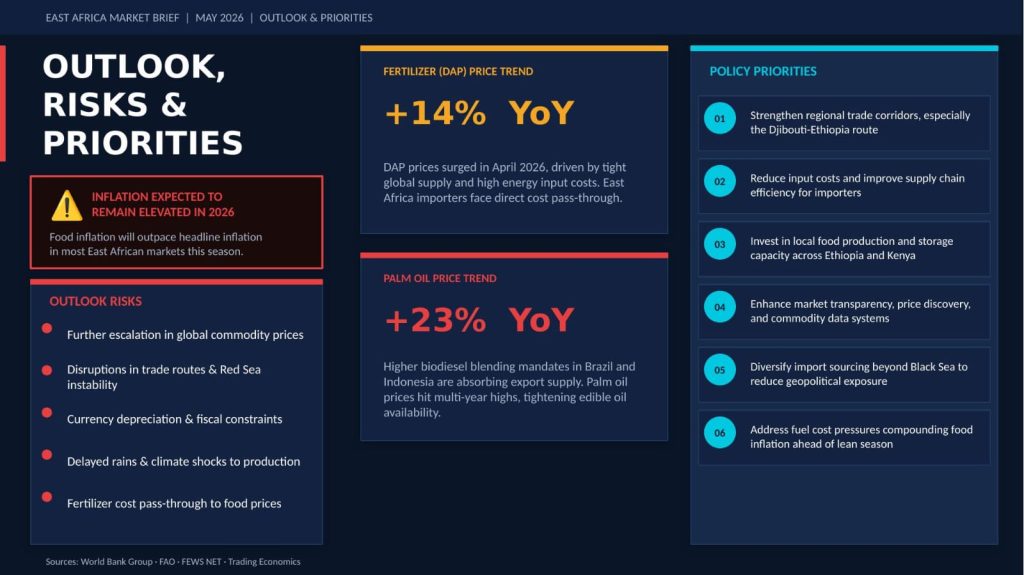
According to the World Bank Group, overall commodity prices are forecast to climb 16% this year, fuelled by surging energy and fertilizer costs. The food price index edged up 1.5% in April alone, while fertilizer prices jumped 14% a direct pressure on sourcing economics and logistics costs across the region.
Sugar
Global sugar prices face upward pressure from geopolitical factors, particularly the Middle East conflict, which risks redirecting cane production toward ethanol. That said, robust growing conditions in key producing nations and a projected global surplus for 2025/26 driven by India and Thailand are providing a price ceiling. For importers in East Africa and the Horn, the short-term picture remains manageable, but procurement timing matters.
Wheat- Ethiopia Focus
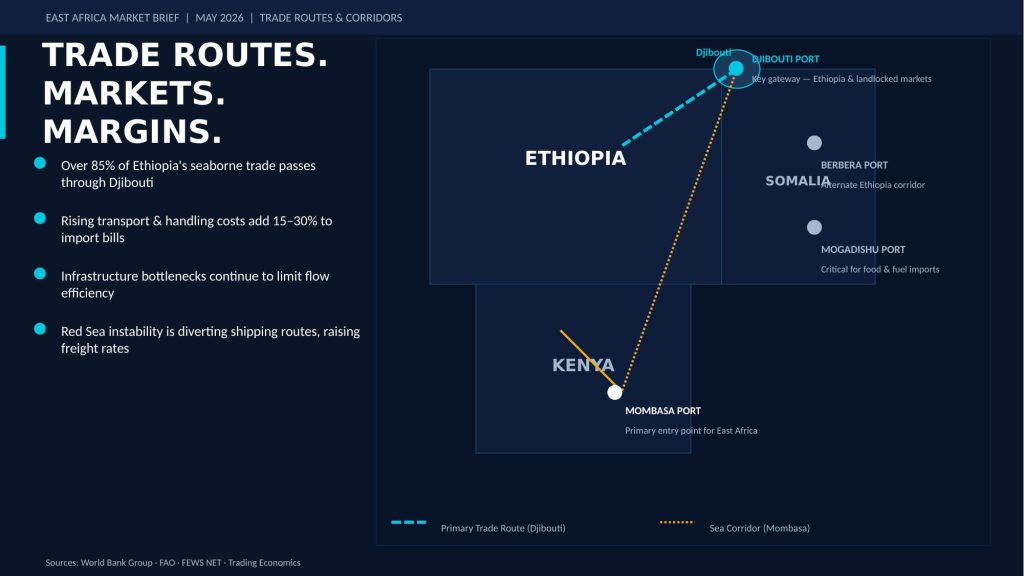
Ethiopia’s structural dependence on wheat imports remains unchanged, with approximately 1.4 million tonnes expected for 2026/27. Private traders continue to source primarily from Black Sea exporters, routing supplies through Djibouti, a corridor where Dania General Trading operates at the centre. The critical risk factor remains currency: ongoing Ethiopian Birr depreciation has the potential to offset any softness in global wheat prices, making landed cost unpredictability a key planning challenge for buyers.
Rice
The Ethiopia-Djibouti trade corridor remains the dominant rice pipeline for the region. Djibouti exported USD 257.7 million worth of rice to Ethiopia in 2023, underscoring how central this route is to cereal supply across the Horn of Africa. Demand fundamentals remain firm.
Edible Oils
Global edible oil supply is tightening. Higher biodiesel blending mandates in Brazil, and planned increases in Indonesia, are absorbing domestic production that would otherwise enter export markets. This structural shift ongoing since 2025 is keeping palm and vegetable oil prices supported. Buyers reliant on international supply chains should factor in reduced availability and price firmness for forward planning.
Food Inflation — Ethiopia
Headline and food inflation in Ethiopia remained relatively stable but elevated between February and March 2026, with rising fuel costs adding further pressure ahead of the lean season. For commodity traders and logistics operators active in the country, this environment calls for tightly managed supply timing and cost-efficiency at every link in the chain.
Dania General Trading monitors East Africa’s commodity flows and price dynamics on an ongoing basis. For supply enquiries or market briefings, contact our Djibouti operations team.